Pool Leak Detection & Repair
Tell evaporation from a leak, then trace pool water loss to the fitting or line responsible.
A backyard spa needs a water fill, a drain path, a gas or electric supply and sometimes a pool-style equipment bay. The plumbing around it decides how easy it is to maintain.
Call to talk through the install or leak, and a contractor is lined up.
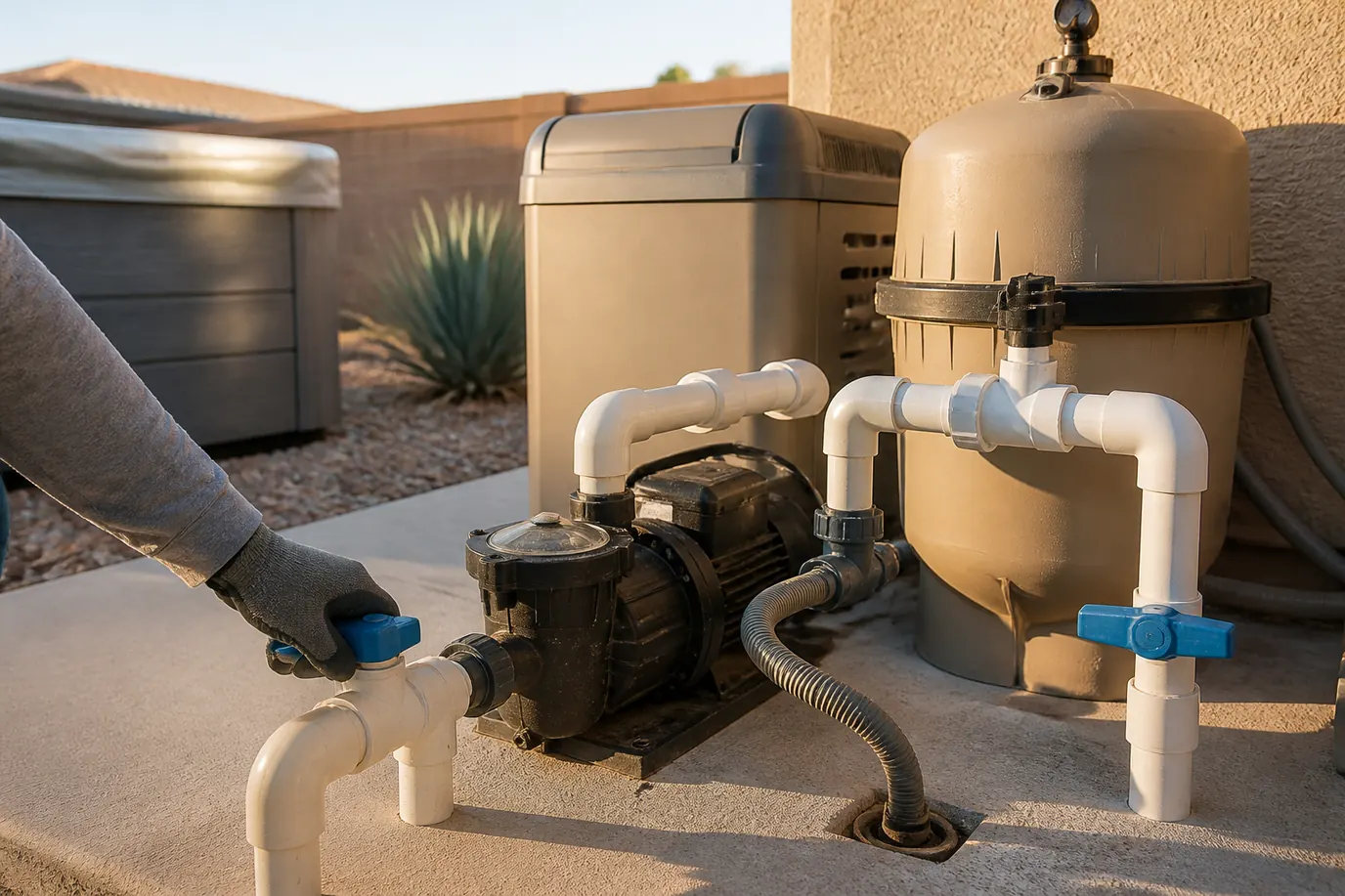
A portable spa fills from a hose. A built-in spa or swim spa may need a dedicated supply line with a shutoff and a backflow device. The drain should reach a legal discharge point, not a neighbor's yard.
Ask where the water will go and who approves it. Some cities limit draining to the street or storm drain.
The bay holds the pump, heater, filter and valves. Leaks start at unions, valve stems and pump seals. Keep the bay ventilated and dry.
A leaking union is a quick fix, while a cracked pump housing needs replacement.
Spa jobs depend on the equipment and the site.
Ask which parts of the job the plumber handles and which need an electrician.
Valley sun and heat make evaporation heavy, so a spa's level drops even without a leak. Cover the spa when not in use.
Hard fill water leaves scale on heaters and jets, so test and balance the water.
Gas spa heaters need a properly sized gas line and venting. Electric heaters need a dedicated circuit with GFCI protection. Both are code items that a contractor should handle.
Never work on a spa with power on. Switch off the breaker first.
A spa that loses water faster than evaporation may leak at a jet fitting, a pipe or the shell. Pressure tests and dye tests can find the loss.
See pool leak detection for the bucket test and other steps.
Measure the path from the gate to the pad. Confirm the pad is level and rated for the weight of a full spa. Decide where the fill hose, the drain and the power disconnect will sit so nothing needs to be moved later.
A spa should be drained and refilled on a regular schedule. Plan where the water goes and let chemicals settle first. Never send water across a property line or into a street without checking local rules.
Valley sun can pull inches of water out of a spa in a week, so the level alone does not prove a leak. Mark the level, cover the spa and compare after a few days.
A slow leak can undermine the pad, so do not wait if the ground nearby is soft.
Tell evaporation from a leak, then trace pool water loss to the fitting or line responsible.
Inspect, test and repair the device that stops yard water from reaching the drinking supply.
Extend or fix gas piping for ranges, dryers, grills and fire features.
It depends on local rules. Some cities allow draining to the sewer cleanout, and others limit drainage to the street. Ask before draining.
Evaporation is common in Valley summers. A faster drop may be a leak at a fitting or pipe. A bucket test helps.
For a built-in spa, often yes. A portable spa usually fills from a hose.
A plumber handles gas piping and venting. Electrical work needs an electrician.
Yes. Turn off the spa breaker and call the 24/7 line. Water near the equipment bay is worth reporting quickly.
Larger units need bigger fill and drain plans. Describe the unit when you call.
A leak at a union or pipe is plumbing. A failed pump motor is equipment service. Describe where the water appears.
Call the line, describe the leak or the install, and a dispatcher will match you with a contractor.
Service area centered on Goodyear and nearby Maricopa County cities.