Burst Pipe Repair
Stop the flow, remove the split section of pipe and restore the line.
Wet drywall, padding and framing begin to deteriorate quickly, and mold can follow within a couple of days. Restoration is a different job from the pipe repair: remove the water, dry the building, then rebuild what cannot be saved.
Restoration has its own phone line, shown on this page. Use it for any water loss.
Cut off the source when you can. For a broken supply line, close the main valve. After a storm, do not wade through water if outlets or appliances are energized, and use the breaker only if you can reach it while standing on dry ground.
Photograph the damage before anything moves, lift small items onto furniture or counters, and save receipts for any emergency spending.
Restoration crews follow a standard that groups water by contamination. Category 1 comes from a clean source such as a broken supply pipe. Category 2 carries some contaminants, for example a washing machine overflow. Category 3 is seriously unsanitary and includes sewage and floodwater.
The category determines what can be dried and what must be torn out. Ask the crew which category they believe you have and why.
From July to early September, monsoon storms can push water through doors, low windows and worn roof flashing. Hot, dry air helps surfaces dry, but moisture inside wall cavities and under subfloors still needs equipment.
Floodwater generally counts as the most contaminated category. Avoid contact and have a professional assess it.
The price follows the size of the loss and the kind of water involved, and an insurer is often part of the picture.
Request a written scope. If a claim is open, ask whether the company will coordinate with your adjuster.
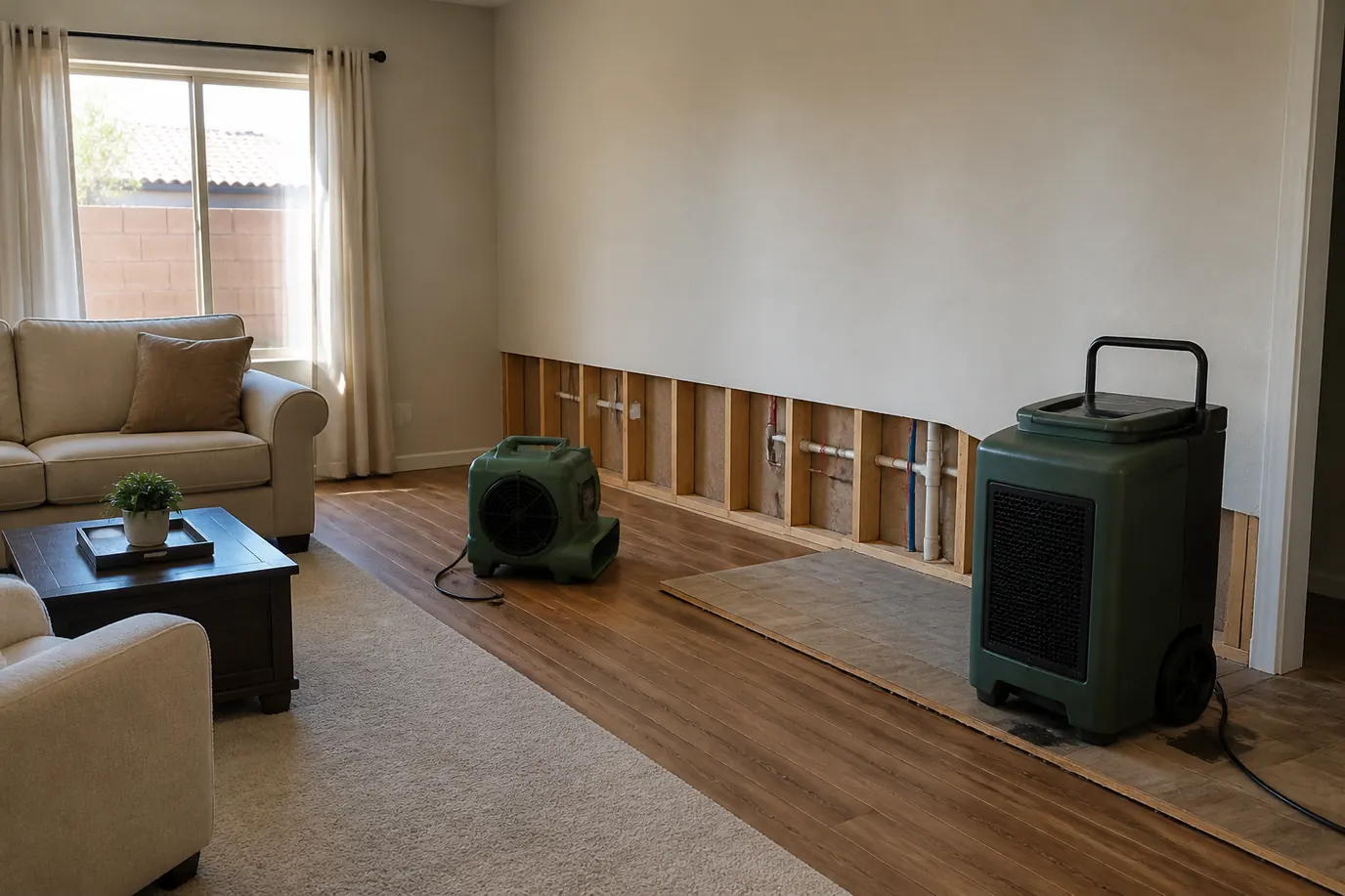
After the standing water is extracted, technicians place fans and dehumidifiers and track moisture readings in walls and floors. The equipment stays until readings match the dry baseline.
Expect several days. Ask for daily readings and a written drying plan, and avoid switching machines off early to save noise.
The EPA notes that mold can begin growing on wet materials within one to two days, so speed matters more than anything else. If growth is already visible, the area may need containment before reconstruction.
Rebuilding comes after drying. Settle who handles drywall, paint and flooring, and whether one company will manage both stages.
Notify the carrier early and ask what documentation they want, usually photos, an inventory of damaged items and a written scope of work. Hold on to every receipt tied to emergency steps.
Policies often treat sudden losses differently from slow ones, so a dated record of what happened is valuable.
Ask how they document moisture readings, how many machines will run and for how long, and what happens if a wall has to open. Ask whether they will hand your insurer the drying logs.
Keep power off in wet areas until someone qualified says it is safe.
Stop the flow, remove the split section of pipe and restore the line.
Pinpoint concealed water loss in walls, floors or buried pipe using listening gear and pressure tests.
Track down cold showers, leaks, noisy tanks and failed heater parts.
Right away. Wet materials can start growing mold in as little as one to two days.
If a pipe or appliance released the water, yes. Restoration dries the structure, and a plumber fixes what failed.
It can carry sewage and other contaminants. Stay out of it and let trained crews handle it.
Many policies cover sudden water losses, while flood often requires a separate policy. Read yours and call your carrier.
Yes. The restoration number on this page rings around the clock. If it is safe, stop the water at its source before the crew arrives.
Phone the restoration line and report where the water came from and roughly how much there is.
Service area centered on Goodyear and nearby Maricopa County cities.