Slab Leak Detection & Repair
Pin down a leak beneath a concrete slab and weigh reroute, spot repair or repipe options.
A bill that suddenly doubled, a patch of damp drywall, or a meter dial that creeps with every faucet shut. Detection pinpoints the escape before anyone cuts into a wall or digs up the lawn. When water is spreading at this moment, use the all-hours line rather than waiting for business hours.
Describe the meter and the damp area when you call, and a contractor nearby is arranged.
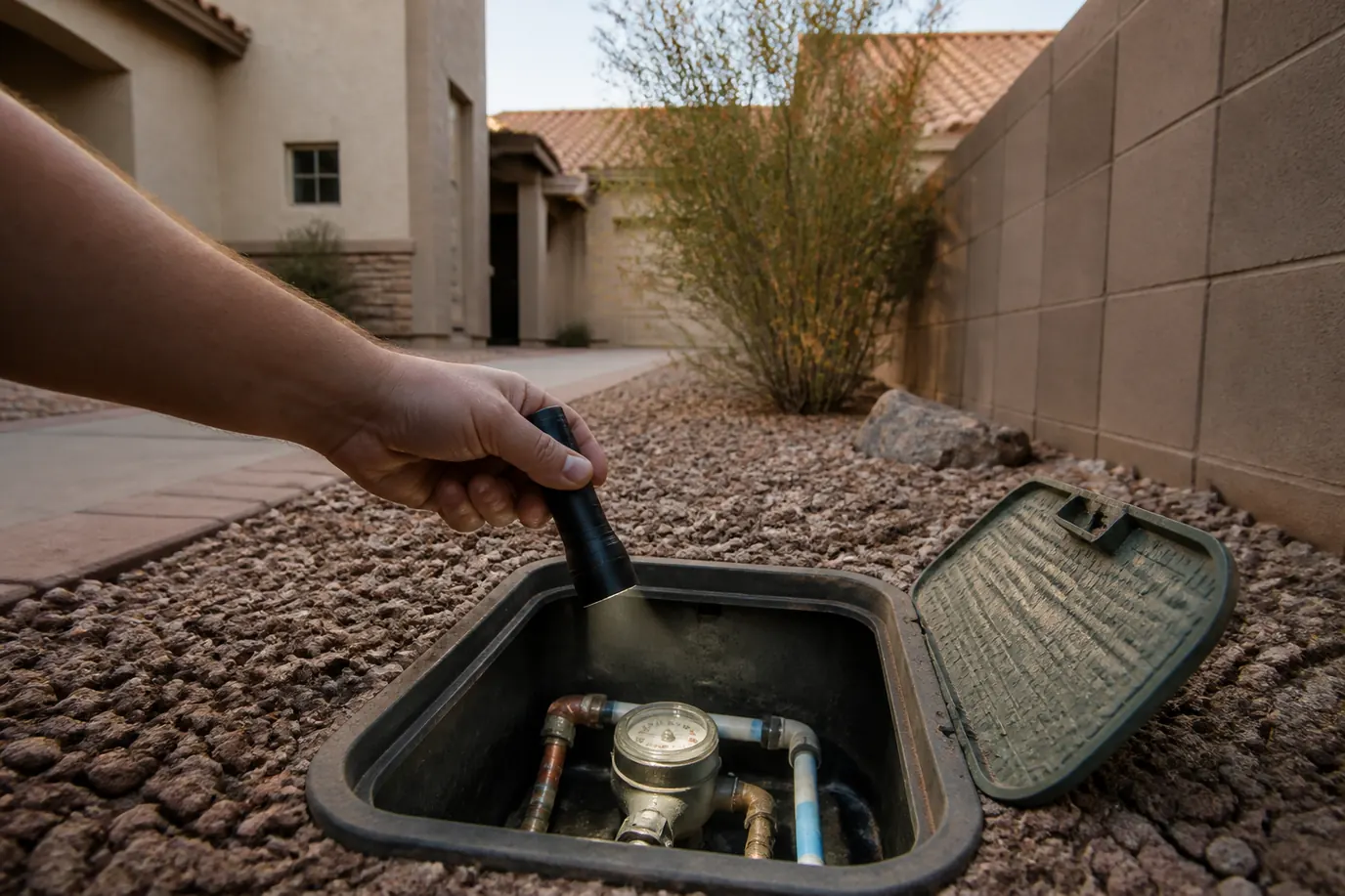
The meter is your cheapest test. Close every faucet, pause the ice maker, shut down irrigation and the softener, then look at the leak indicator on the dial. Movement means water is leaving the pipe somewhere.
Also check the toilets. A tired flapper can lose hundreds of gallons in a month without a sound. Drop food coloring into the tank, wait fifteen minutes and see whether the bowl changes color.
Technicians close the main and observe pressure, then shut branch valves one by one. The branch that holds pressure is clean, and the one that falls is the suspect. This divides the plumbing into hot, cold, irrigation and the service line.
Within the suspect section, acoustic listening gear hears water escaping a pressurized pipe, and a thermal camera reveals temperature shifts. Equipment differs by company, so ask what will be brought.
Most Valley houses are built on slabs, which puts supply and drain pipes under the floor rather than in an attic or crawlspace. A pinhole down there can drip for months before a warm tile or a bill gives it away.
Summer irrigation clouds things, because a higher bill could be the sprinklers or a leak. Turn irrigation off, run the meter test, and you will know before anyone digs.
Detection is typically charged for the time and method it takes, while the repair is quoted on its own. A few factors shift the figure.
Ask if the search fee counts toward the repair when the same company fixes the leak. Policies differ, so get it in the quote.
Inside walls, behind tubs, along appliance supply lines and beneath slabs are the usual spots. Outside, the sprinkler system and the buried line from the meter cause most of the trouble.
A drain leak appears only while water is going down it, so a stain after a shower suggests drainage. Supply leaks keep going day and night.
Expect the contractor to name the spot, the likely cause and the repair choices. A failed shutoff valve is a quick job. A break under the slab has several routes with different prices.
Ask whether the quote covers the opening it takes to reach the pipe. Drywall or tile work afterward is often billed separately, and it is better to know in advance.
Pin down a leak beneath a concrete slab and weigh reroute, spot repair or repipe options.
Fix or swap the buried pipe that carries water from the meter into the house.
Extract water, dry the structure and rebuild after a leak, burst line or storm.
Check the meter with everything off. A moving indicator means water is escaping. A bigger bill, a musty smell or a warm spot on the floor add to the evidence.
Often it is. The pipe can be isolated and listened to, and a thermal camera narrows it further, so only the exact spot needs opening. Pressure-only leaks take more time.
Not always. Sprinklers, a pool top-off, houseguests and a running toilet can all push usage up. A meter test with irrigation off tells the difference.
A straightforward one may take under an hour, and a house with many suspect branches takes longer. The contractor can estimate once you describe the symptoms.
Phone the round-the-clock number and say where water appears and whether the meter keeps turning. Shut the main if it is within reach, and ask about arrival timing before agreeing to a visit.
Phone the line, say what the meter and the damp spot are doing, and a dispatcher will find a contractor who locates leaks.
Service area centered on Goodyear and nearby Maricopa County cities.