Spa & Hot Tub Plumbing
Plumb or repair the fill, drain and equipment connections of a backyard spa.
Pools lose water to the sun all summer, so a dropping level is not always a leak. The first step is telling evaporation from loss, then tracing the loss to its source.
Call, describe how fast the level drops, and a contractor is lined up.
Fill a bucket with pool water to match the pool level, set it on a step, and mark both water levels. After a day or two, compare the drop. If the pool lost much more than the bucket, evaporation is not the whole story.
Run the test with the pump on, then off. If the loss changes, the leak is probably in the plumbing and not in the shell.
Leaks occur in the shell, the skimmer, the return lines, the suction lines, the valves and the equipment pad. Return and suction lines run buried, so finding them takes pressure tests and listening.
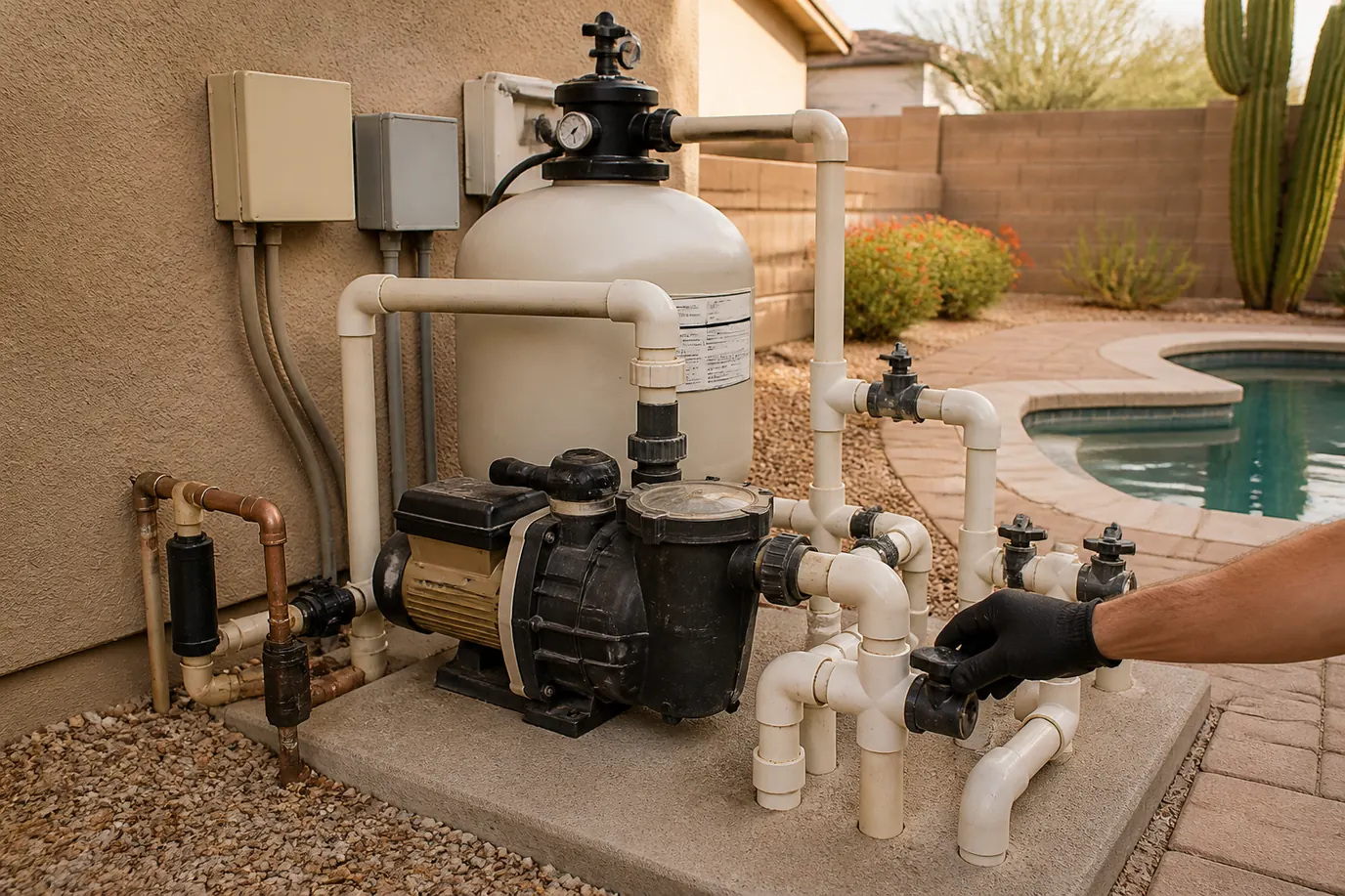
A pad leak is often visible as a drip at a union or a valve stem. A buried line leak is harder and needs the line isolated.
Cost depends on how many tests are needed and what is damaged.
Ask whether detection and repair are priced together or separately.
Arizona sun and dry air pull a lot of water out of a pool in summer, so some loss is normal. That makes the bucket test especially useful before paying for a search.
Monsoon storms and heavy use swing the level too, so test during a calm stretch.
Typical steps are a pressure test on each line, a dye test near cracks and fittings, and a listening survey at the shell. Ask which tests the contractor performs and what each shows.
Be clear on what the contractor repairs. Some fix pool plumbing, while others handle shell cracks and liners. Say which you need when you call.
A leak that lets the pump run dry can burn out the motor. If the level drops below the skimmer, switch the pump off until the leak is found.
Keep records of the water level and the fill dates. They help a contractor see patterns.
A pool can lose water at the shell, a skimmer, a return line or at the equipment pad. Running the pump and then turning it off helps show whether the loss changes with pressure.
Do not chase the level every day with a hose. Note the level, the date and the weather so the technician can read the pattern.
Plumb or repair the fill, drain and equipment connections of a backyard spa.
Pinpoint concealed water loss in walls, floors or buried pipe using listening gear and pressure tests.
Inspect, test and repair the device that stops yard water from reaching the drinking supply.
Use the bucket test. If the pool loses much more water than the bucket over the same period, there is likely a leak.
Yes. Suction lines leak differently from return lines, and some leaks only show with the pump running.
It can, since you refill more often. A jump in the bill after summer refills is worth checking against the bucket test.
That is often a pool specialist. A plumber handles the pipes, valves and equipment. Say which part you suspect when you call.
It does. Rapid water loss or a leak at the equipment pad should be reported promptly, and the pump can be switched off if the level nears the skimmer.
Call the line, say how much the level is dropping, and a dispatcher will match you with a contractor.
Service area centered on Goodyear and nearby Maricopa County cities.