Water Heater Installation & Replacement
Replace a worn-out tank with the right capacity, fuel type and placement.
Cold showers, a puddle in the garage or a tank that rumbles like popcorn all point to a heater that needs attention. Repair starts with finding out which part failed, and whether the tank is worth saving.
Call, tell the dispatcher what the heater is doing, and a contractor is lined up.
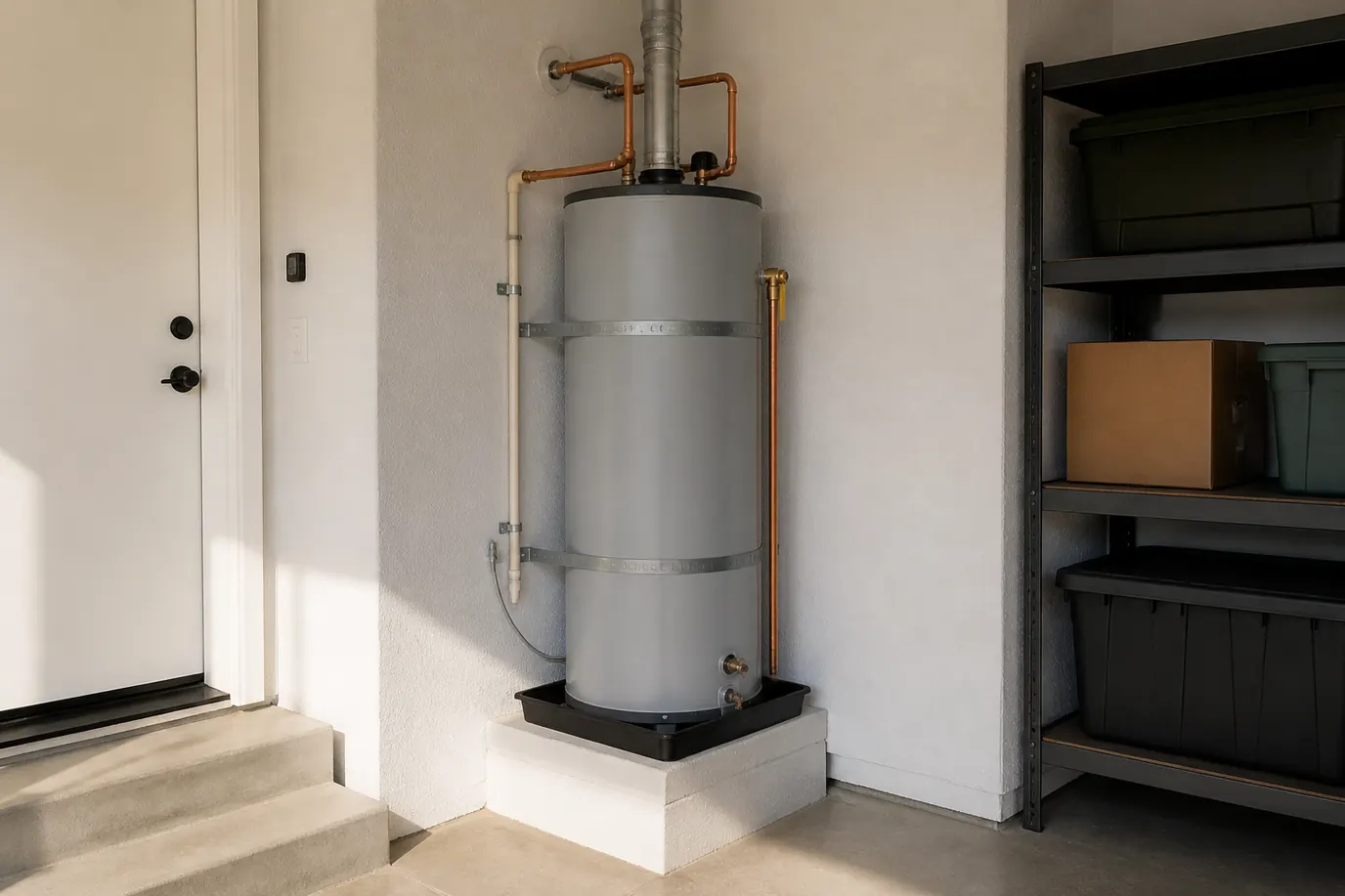
For an electric heater, check the breaker and the reset button on the upper thermostat. For gas, confirm the pilot or igniter is working and the gas valve is on. These checks take minutes and sometimes solve the problem.
If water is leaking, close the cold supply valve above the heater and switch off power or gas. A leaking tank cannot be repaired, but a leaking fitting often can.
Heating elements, thermostats, thermocouples, igniters and relief valves wear out and are usually cheap to replace. A dip tube failure sends cold water to the top, and a sacrificial anode can be swapped to slow rust.
A failed gas valve or a cracked tank is a bigger decision. Compare the cost of the part with the age of the unit before spending money.
Repair quotes are usually small compared with replacement, and these factors shape them.
Ask the contractor to state the repair cost, the expected remaining life and the cost of a new unit side by side.
The city's 2021 water quality report lists average hardness near 14 grains per gallon. That much mineral builds scale on heating elements and the tank floor, which means noise, wasted energy and shorter life.
Garages get very hot in summer, which is also hard on controls and connectors. Flushing the tank once a year helps, and a softener helps more.
Many tanks last around a decade, and less in hard water. If the heater is old and the repair is large, replacement may make more sense. If it is young and the part is cheap, repair is better.
Ask the contractor to explain the choice in terms of age, repair cost and remaining life. See water heater replacement if the tank cannot be saved.
Never leave a leaking gas heater running. If you smell gas, leave the building and call 911 or the gas utility from outside. A relief valve that drips constantly is a warning sign.
Make sure the water heater sits on a drain pan or has a drain line, and that the area around a gas heater is clear of storage.
Thermostats, heating elements, igniters, thermocouples and relief valves are the usual parts. Many are quick to swap. The sacrificial anode rod is a wear part that, when ignored, lets the tank rust.
Draining a few gallons from the tank each year helps clear sediment.
Replace a worn-out tank with the right capacity, fuel type and placement.
Descale, troubleshoot error codes and repair or swap on-demand heaters.
Install a softener to handle Valley hard water, or revive one that no longer works.
On an electric heater, check the breaker and the reset button. On gas, check the pilot or igniter. A failed element or thermostat is common. If those checks do not help, call for service.
Yes. Close the cold supply valve, switch off power or gas, and call the 24/7 line. A leak from the tank body usually means replacement.
Scale on the bottom of the tank traps water that boils beneath it. A flush can help, though heavy scale may mean the tank is near the end of its life.
Often, yes, if the tank is sound. Ask for a comparison of repair cost and replacement cost before deciding.
Call the line, describe what the heater is doing, and a dispatcher will match you with a contractor.
Service area centered on Goodyear and nearby Maricopa County cities.