Faucet & Sink Repair
Cure drips, weak flow, stuck stop valves and puddles in the cabinet below.
A backflow preventer is a valve assembly that stops water from reversing into the drinking supply. Irrigation systems and some commercial plumbing need one, and it needs testing on a schedule.
Call to ask about testing or repair, and a contractor is lined up.
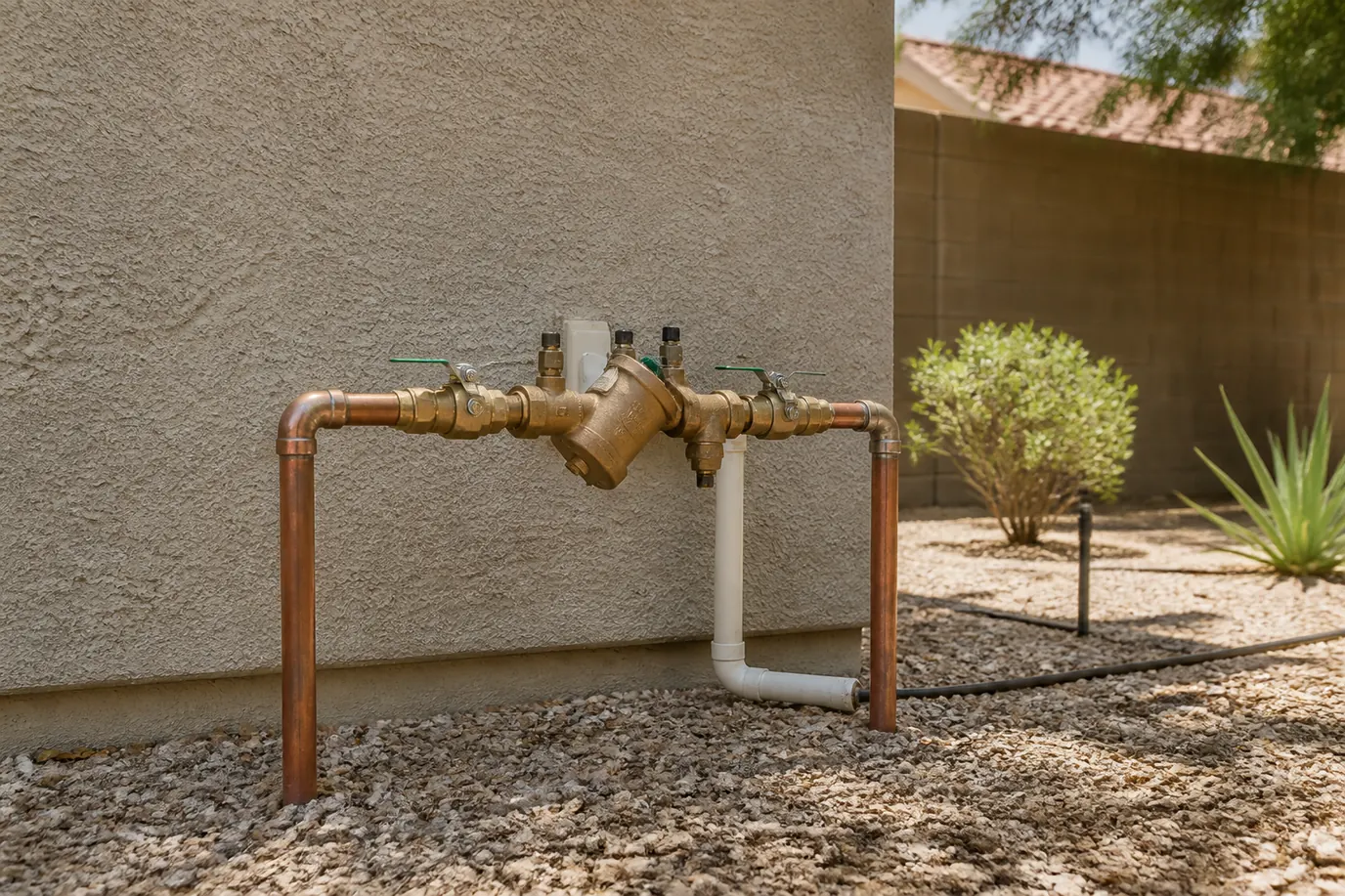
When pressure drops in the main, water can flow backward. Without protection, irrigation water, fertilizer or other contaminants could be sucked into the home supply. A backflow preventer stops that.
The device looks like a short run of brass or bronze pipe with two or more test cocks and valves.
Many utilities require annual testing on certain devices. The test must be done by a certified tester, and the results go to the utility. Ask your utility what it requires.
A home irrigation device may not need a certified test in every city. Check the local rule.
Valley yards rely on irrigation, and many use drip lines. The City of Goodyear also produces A+ reclaimed water for non-drinking uses such as watering grass, so confirm which water your system uses before any work.
Never connect reclaimed water to a household tap or drinking supply.
A test is small, and a replacement is larger.
Ask whether test reporting to the utility is included.
Devices drip when seals wear, crack when frozen or damaged by impact and fail tests when debris sticks the check valves. Replacement parts are common for many models.
A device that sprays or leaks constantly needs attention soon. Shut off the irrigation supply if needed.
A new device is placed after the main shutoff for irrigation, at the height and spacing the manufacturer and code require. A contractor should handle the permit and any testing.
Ask about enclosures. Direct summer sun and impact both shorten the life of a device.
Most problems show up at the assembly itself.
Keep the last test report with your house records. Trim shrubs so the tester can reach the test cocks, and mark the box so landscapers do not bury it.
Ask whether the person is certified to test assemblies, whether they file the report with your water provider and what happens if the device fails. A failed test usually means cleaning or replacing internal parts, then retesting.
Get the result in writing, including the serial number of the assembly, so next year's visit starts from a clean record.
Cure drips, weak flow, stuck stop valves and puddles in the cabinet below.
Tell evaporation from a leak, then trace pool water loss to the fitting or line responsible.
Pinpoint concealed water loss in walls, floors or buried pipe using listening gear and pressure tests.
It depends on your utility and the device. Ask the utility what it requires for your address.
Worn seals, debris on a check valve or damage from impact are common causes. Shut off the supply if it sprays.
Many cities require a licensed contractor and a permit. Ask before buying a device.
Many have a vacuum breaker built in. A missing or broken one lets water siphon back when a hose is in use.
Yes, someone answers at every hour. Scheduled tests happen by day, though a device throwing water or with a split body deserves an immediate call.
Usually the water provider. Ask the tester how the report is filed.
Yes, and it makes testing harder. Keep it clear.
Call the line, describe the device, and a dispatcher will match you with a contractor who tests them.
Service area centered on Goodyear and nearby Maricopa County cities.