Leak Detection
Pinpoint concealed water loss in walls, floors or buried pipe using listening gear and pressure tests.
When pinhole leaks keep appearing, water runs brown or pressure fades, spot repairs stop making sense. Repiping replaces the supply pipe throughout the house in one planned project.
Call to talk through the symptoms and whether a repipe or a repair fits.
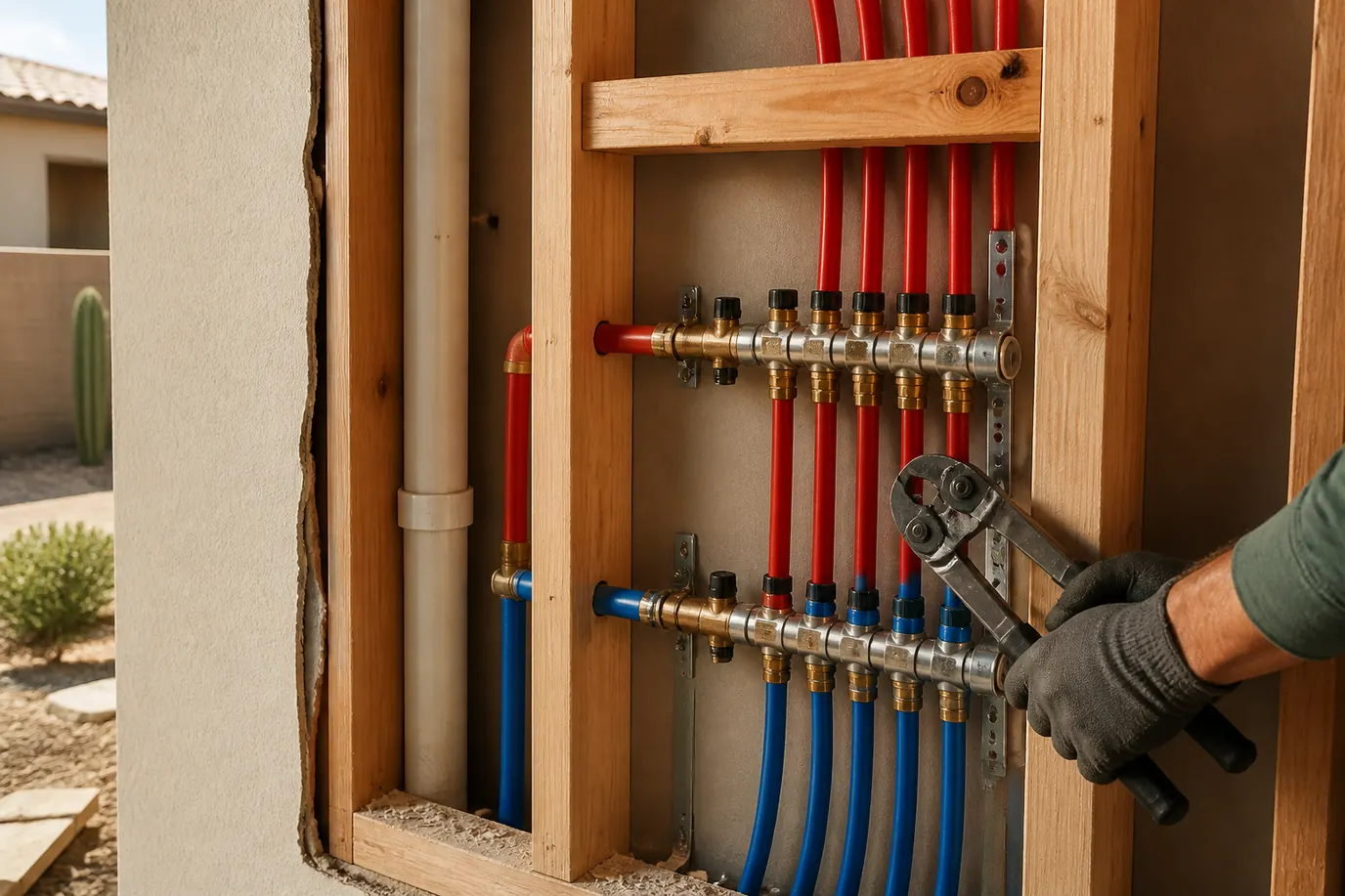
One leak in good pipe is a repair. Several leaks in the same line, in different rooms, tell you the pipe itself is failing. At some point, paying for a new patch every year costs more than replacing the run.
A leak test and a look at the pipe material come first. Some trouble is a bad fitting, not the whole system, and a careful contractor will say so.
Copper lasts a long time but can pinhole where water is aggressive. PEX is flexible and quick to install. CPVC is rigid and suits many houses. Galvanized steel corrodes from the inside and narrows over time.
Ask which material the contractor proposes and why. Hard water is common in the Valley, and each material handles it a little differently.
Hard Valley water leaves mineral scale that narrows older pipe and shortens the life of fixtures. Homes built decades ago may still carry galvanized or early copper lines.
Newer homes with PEX often avoid corrosion, though a bad fitting or an exposed section can still fail.
A repipe is priced by the size of the house and the work needed to reach the pipe.
Ask whether the quote includes permit fees and wall repair, and whether water will be off overnight.
The crew shuts off the water, opens small access holes in drywall and runs new pipe from the main to each fixture. Many repipes route through the attic and walls to avoid the slab.
Most repipes take a few days, with the water off for part of each. Ask about the schedule, how much drywall will be opened and who patches and paints afterward.
Get the scope in writing: which fixtures, which material, who patches walls and what permit applies. If you are selling, a repipe can be a point in a home's favor, though buyers vary.
Compare at least two plans. Check each contractor's Arizona Registrar of Contractors license before signing.
A repipe means holes in walls and a day or more without water. Ask how the crew limits that, who patches the drywall and whether paint is included. Plan for pets, work calls and showers elsewhere.
Request a clear scope: which fixtures are replaced, which pipe is used and how the old lines are capped or removed.
Repeated pinhole leaks in different spots, discolored water at every tap and falling pressure throughout the house suggest the system is wearing out. One failed section does not always call for a full repipe, so ask for the reasoning behind a recommendation.
Pinpoint concealed water loss in walls, floors or buried pipe using listening gear and pressure tests.
Pin down a leak beneath a concrete slab and weigh reroute, spot repair or repipe options.
Fix or swap the buried pipe that carries water from the meter into the house.
Repeated leaks, discolored water and falling pressure are the main signs. A leak test and a look at the pipe material help decide whether to repair or replace.
Many take a few days, depending on house size and access. Ask the contractor for a schedule and how long the water will be off each day.
Often it does. The contractor should know what your city requires and who files it.
It can help, but buyers differ. A recent repipe is easier to explain than a history of leaks, so discuss timing with your agent.
Yes, the line is answered around the clock. Close the main if a pipe is leaking, then call. A full repipe is planned work and is scheduled by day.
Call the line, describe the leaks and the age of the house, and a dispatcher will connect you with a contractor.
Service area centered on Goodyear and nearby Maricopa County cities.