Leak Detection
Pinpoint concealed water loss in walls, floors or buried pipe using listening gear and pressure tests.
Water that surfaces through a floor, a hot patch on the tile or a meter that never stops can all mean a leak beneath the concrete. The job is to find the pipe without tearing up more floor than needed. Water rising through the floor or a hot patch on the tile deserves a call at any hour.
Call, describe the warm spot or the wet floor, and a contractor who works on slab leaks is lined up.
A slab leak is a leak in a pipe that runs under or inside the concrete foundation. Water lines, hot lines and drain lines can all be affected, and each behaves differently.
Most slab leaks start as pinholes in copper, a worn fitting or a joint that shifted as the ground settled. Water finds the path of least resistance, so the wet spot on the floor may be some distance from the pipe that is failing.
Confirm it first with a meter test, then isolate the house with the main valve closed and watch pressure. A drop points to a supply leak, while a stable pressure suggests the water is coming from a drain or elsewhere.
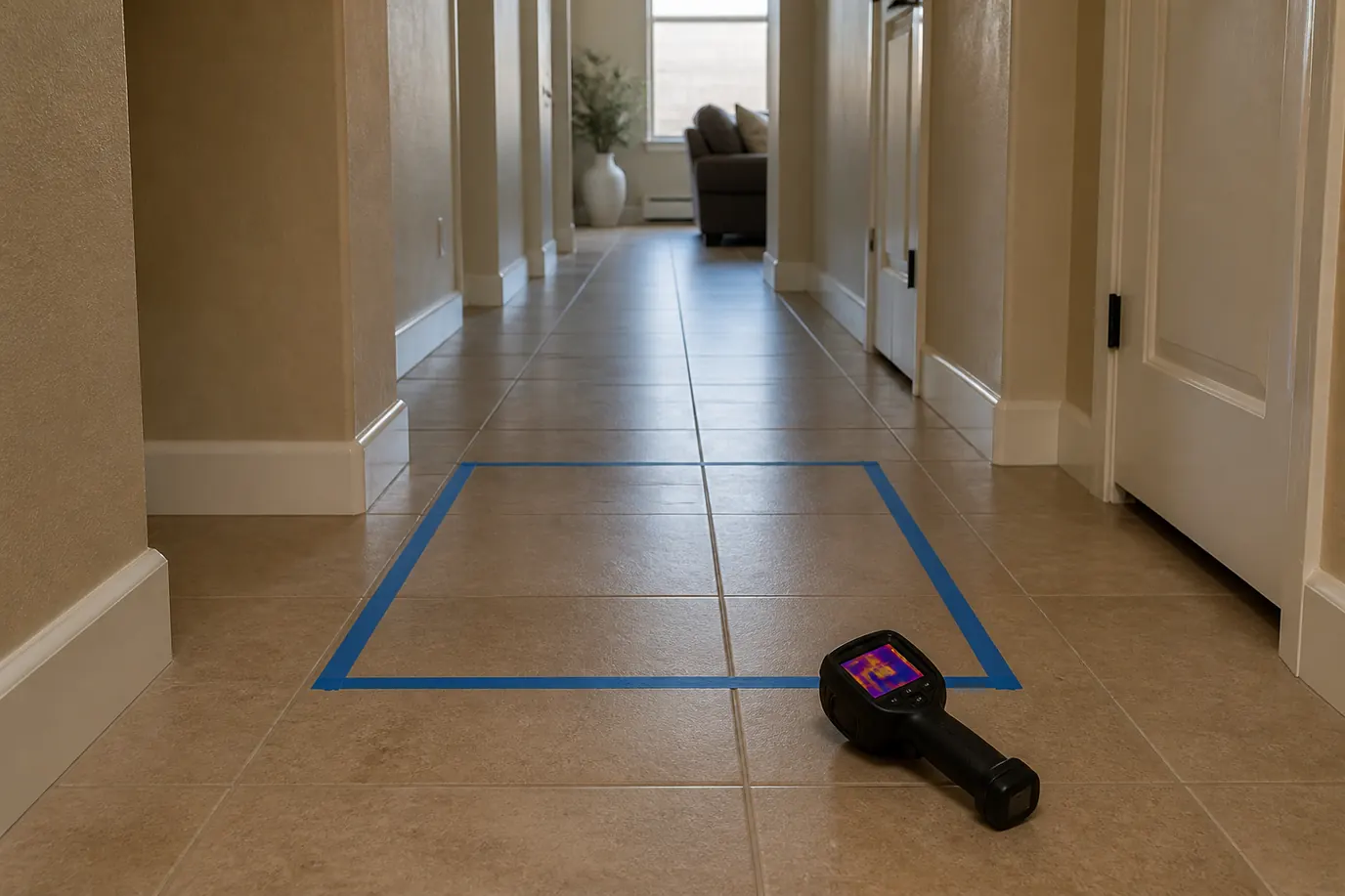
A contractor can then trace the line using listening devices, a thermal scan or a pressure test on each branch. Ask how close the contractor expects to pinpoint the spot, and whether it will be marked on the floor before cutting begins.
The cost swings widely, because the pipe may be under a hallway, a kitchen or a patio. These factors move the quote.
Ask who handles the flooring afterward, because many plumbers stop at the pipe and concrete patch.
Slab-on-grade construction is common in the Valley, which means many homes have pipes buried in or under the concrete. Hard water and hot soil add to the wear on copper over the years.
In older homes, pinholes in copper lines are a frequent cause. If one slab leak appears, another may follow, so ask whether the rest of the line is worth testing.
The usual approaches are to cut the slab and repair the pipe, to reroute the line through the attic or walls, or to replace a longer run if the pipe is failing in several places. Which fits depends on how many leaks exist and where the line runs.
Rerouting avoids the slab entirely and is common when the same line has leaked more than once. Cutting is faster for a single clear leak. Ask for both options in writing, with what each does to the flooring.
Close the main valve if water is spreading, and keep the water off until the contractor arrives. Lift rugs and furniture off wet flooring and photograph the damage for your insurer.
If you can, note where the warm spot sits and whether the meter moves with the house isolated. Those two details help the dispatcher match the call.
Pinpoint concealed water loss in walls, floors or buried pipe using listening gear and pressure tests.
Replace tired supply piping throughout the home once spot fixes stop working.
Extract water, dry the structure and rebuild after a leak, burst line or storm.
Warm spots on the floor, wet carpet at the baseboard and a meter that moves with the house shut off all point down. A pressure test and listening devices confirm it before any cutting.
Ask the contractor. A careful job marks the leak location on the floor, shows you, and confirms the cut size before opening the slab.
Often, yes. Rerouting through the attic or walls avoids the concrete and suits cases where the same line leaks repeatedly, though it needs access and some drywall work.
Many policies cover water damage that results from a sudden leak but not the cost of the pipe itself. Some cover the cost of reaching the pipe. Read your policy and call your insurer.
It usually is. Shut the main valve, keep power off near wet areas and call the 24/7 line. A slow, steady loss under the slab can wait for a morning visit, but a fast one cannot.
Call the line, say where the warm spot or the wet floor is, and a dispatcher will connect you with a contractor.
Service area centered on Goodyear and nearby Maricopa County cities.