Toilet Repair & Installation
Stop a running, rocking, leaking or clogged toilet, or set a new bowl.
A bidet seat adds a water-fed rinse to an existing toilet, and a standalone bidet is its own fixture. Either one needs a clean water connection and, for some, an outlet.
Call to talk through the install, and a contractor is lined up.
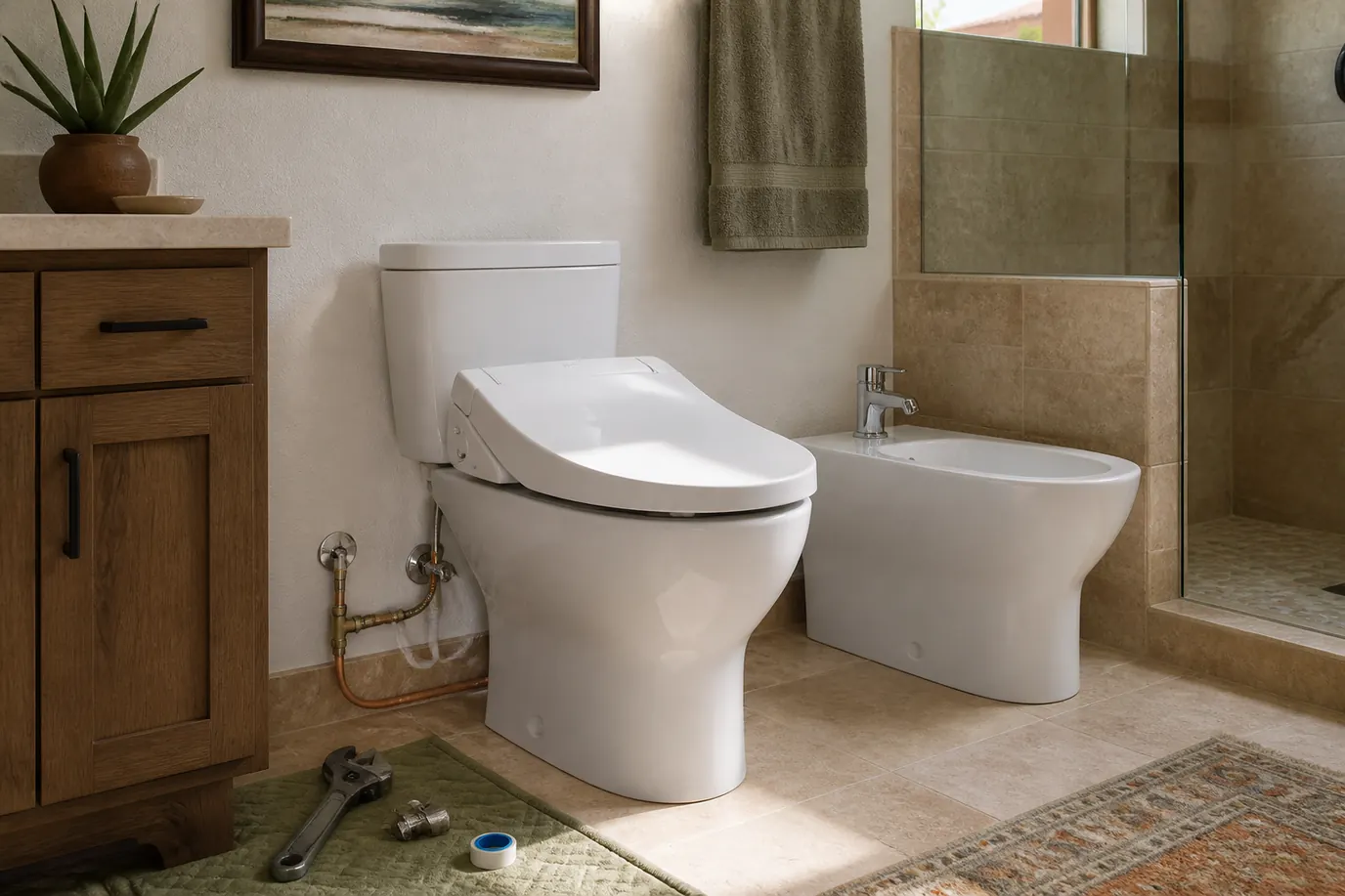
A bidet seat replaces your toilet seat and can have warm water, a dryer and a heated seat. An attachment is a slimmer, cold-water unit. A standalone bidet needs its own drain, hot and cold supply and floor space.
Choose by budget, space and whether you want warm water. The bathroom layout often decides.
Seats connect to the cold supply with a T-valve and a flexible line. Models with a heater or dryer need a nearby outlet. The valve should be a quality, accessible shutoff.
Ask whether the quote includes a new shutoff, a braided line and testing for leaks.
Mineral scale clogs small nozzles, so a bidet seat in hard water needs periodic cleaning. A softener helps.
Summer heat warms the cold line, so a seat with instant heating may feel less different from the cold supply than you expect. Ask the installer how the model you chose behaves.
Seats are a quick install. Standalone fixtures are a plumbing project.
Ask whether the bidet itself is included in the quote or supplied by you.
A heated seat needs a GFCI-protected outlet near the toilet. Water and power sit close together here, so use the right outlet and do not run cords through water.
If there is no outlet, an electrician may need to add one. Say so in the first call.
A standalone bidet needs hot and cold lines and a drain with a trap and vent. On slab homes, the drain may mean cutting concrete.
Check clearance rules with the contractor before choosing a position.
Look at the toilet first. Some seats fit only certain bowl shapes, and a nearby outlet matters for heated models. Check that the cold supply valve works and has a free connection for a tee fitting.
Ask the installer to test for leaks after an hour and again the next day, because small supply connections can weep slowly.
Most add-on seats use only the cold supply, which is why summer heat in the pipes can make the first spray warmer than you expect. Models with a built-in heater avoid that but need power.
Ask the installer to set pressure low on the first day. Fittings under a toilet tank are small, and a hand-tight connection that weeps will show up as a damp spot on the floor.
Wipe the nozzle housing with a mild cleaner and avoid harsh chemicals that can crack plastic. If water pressure feels weak, check the small inlet screen for scale, which hard water builds up quickly.
Stop a running, rocking, leaking or clogged toilet, or set a new bowl.
Swap a shower, tub or valve and set the drain at the right height.
Install a softener to handle Valley hard water, or revive one that no longer works.
Most standard toilets can, but the bowl shape and size matter. Check that the seat fits.
Only if the seat needs power and no outlet is near. A GFCI outlet is the usual solution.
A seat install usually takes under an hour. A standalone fixture takes much longer.
Not if the T-valve and the line are tight. The contractor should test for leaks before leaving.
Close the small valve feeding it, then phone the 24/7 line. A loose fitting is often a short fix.
For heated seats, yes. Non-electric attachments need only a water connection.
Ask the dispatcher. Bring the model number so fit can be checked.
Call the line, say which type you want, and a dispatcher will match you with a contractor.
Service area centered on Goodyear and nearby Maricopa County cities.