Drain Cleaning & Unclogging
Open clogged sinks, tubs, laundry lines and main drains, and find out why they keep stopping.
A toilet that runs, rocks, leaks or overflows can waste water and damage a floor. Most repairs are quick when the cause is clear, and some mean the toilet itself needs replacing. An overflowing bowl or a puddle at the base should be stopped at the wall valve before you call.
Call, say what the toilet is doing, and a contractor is lined up.
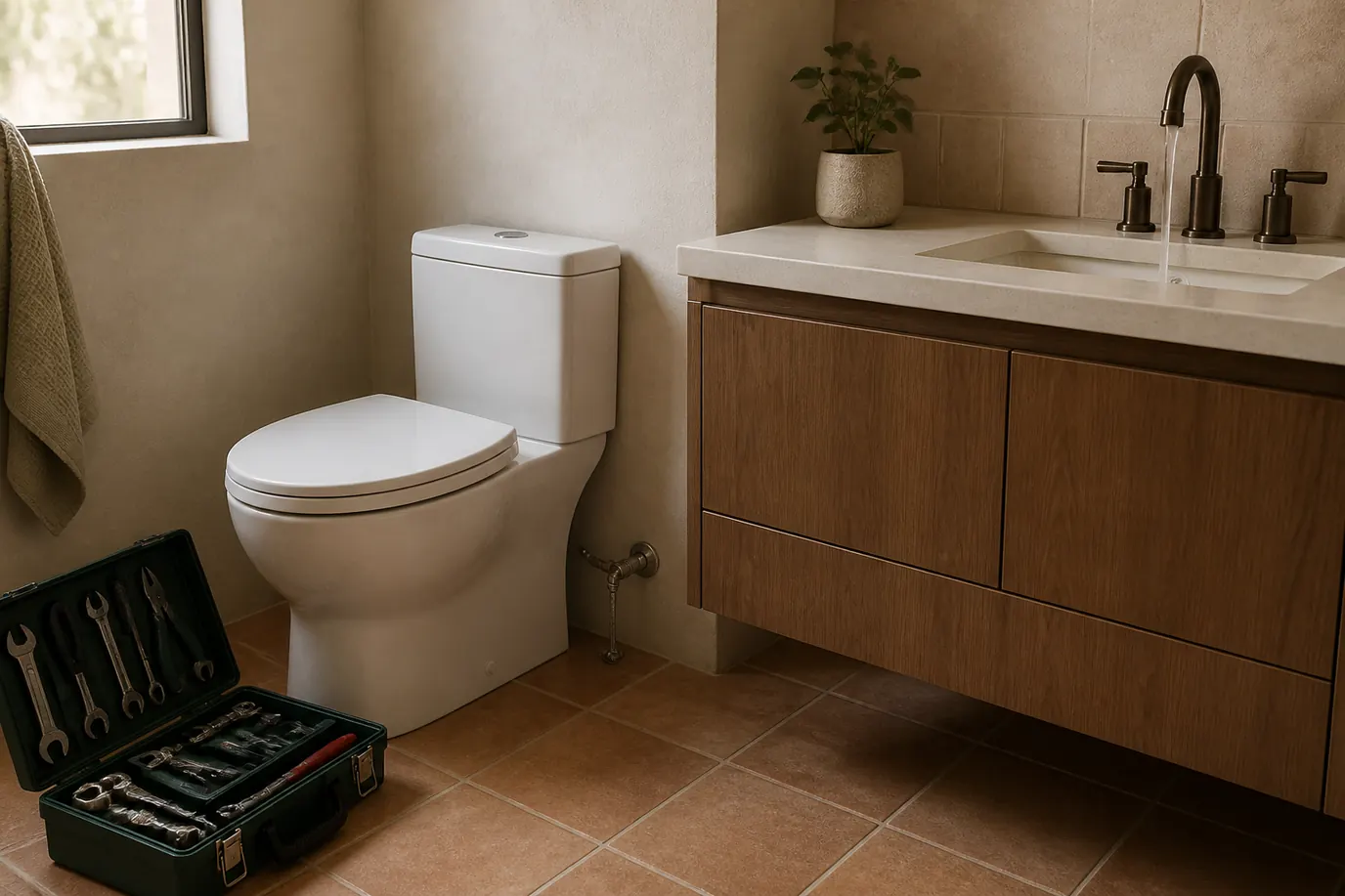
Close the oval valve on the wall behind the toilet. Turn it clockwise until it stops. If the bowl is rising, lift the tank lid and hold the flapper closed.
Do not flush again until you know why it is rising. A second flush pushes more water into the bowl.
A running toilet usually has a worn flapper, a chain with too much slack or a fill valve that sticks. These parts are inexpensive and quick to swap.
A leak at the base means the wax ring failed or the toilet rocks on its flange. The toilet has to come up for a new ring, and the floor around it gets checked for water damage.
Hard water leaves scale in toilet tanks and rim jets, which causes weak flushes and running. A yearly cleaning helps.
Older toilets use far more water per flush than current models, so replacement can lower a water bill.
A fill valve swap costs far less than a full replacement. These factors set the quote.
Ask whether the quote includes the toilet or only the labor.
A plunger solves most clogs in the bowl. If the toilet clogs often, the issue may be in the drain line or the vent. A weak flush can also come from mineral deposits in the rim holes.
If the toilet and a nearby tub or shower back up together, the main line is the likely problem. See drain cleaning for next steps.
Replacement makes sense for a cracked bowl, a repeated problem or a model that wastes water. A new toilet needs the right rough-in size, a new wax ring and a good floor flange.
Ask the contractor whether the quote includes hauling away the old toilet and checking the flange.
A running toilet usually points to a worn flapper or fill valve. A weak flush may be a partial clog or blocked rim jets. A rocking bowl has lost its seal on the floor flange. Each has a different fix, so describe the symptom on the call.
Open clogged sinks, tubs, laundry lines and main drains, and find out why they keep stopping.
Cure drips, weak flow, stuck stop valves and puddles in the cabinet below.
Pinpoint concealed water loss in walls, floors or buried pipe using listening gear and pressure tests.
A flapper that does not seal or a fill valve that sticks lets water leak from the tank to the bowl. Food coloring in the tank shows a leak.
Yes. A rocking toilet breaks the wax seal and can leak into the floor. Tightening the bolts may help, and a new ring may be needed.
Repeat clogs may be due to a partial blockage in the drain, a vent problem or a toilet that is too weak. A camera or a cable can find the cause.
Many replacements take an hour or two. Floor problems add time.
Turn the oval handle behind the toilet clockwise to close the supply. Lift the tank lid and hold the flapper closed if water still rises. Then call the 24/7 line and say whether other drains are slow too.
A worn part is cheap to fix. A cracked bowl or an old toilet that clogs often is a replacement candidate.
It can be a failed wax seal, a loose supply line or condensation. Dry it and watch where moisture returns.
Close the wall valve, then call the line. A dispatcher will match you with a contractor.
Service area centered on Goodyear and nearby Maricopa County cities.