Water Heater Repair
Track down cold showers, leaks, noisy tanks and failed heater parts.
Tankless heaters promise endless hot water, and hard water makes them throw error codes and run cold. Service means flushing scale, clearing faults and fixing or replacing failed parts.
Call, describe the error code or the symptom, and a contractor is lined up.
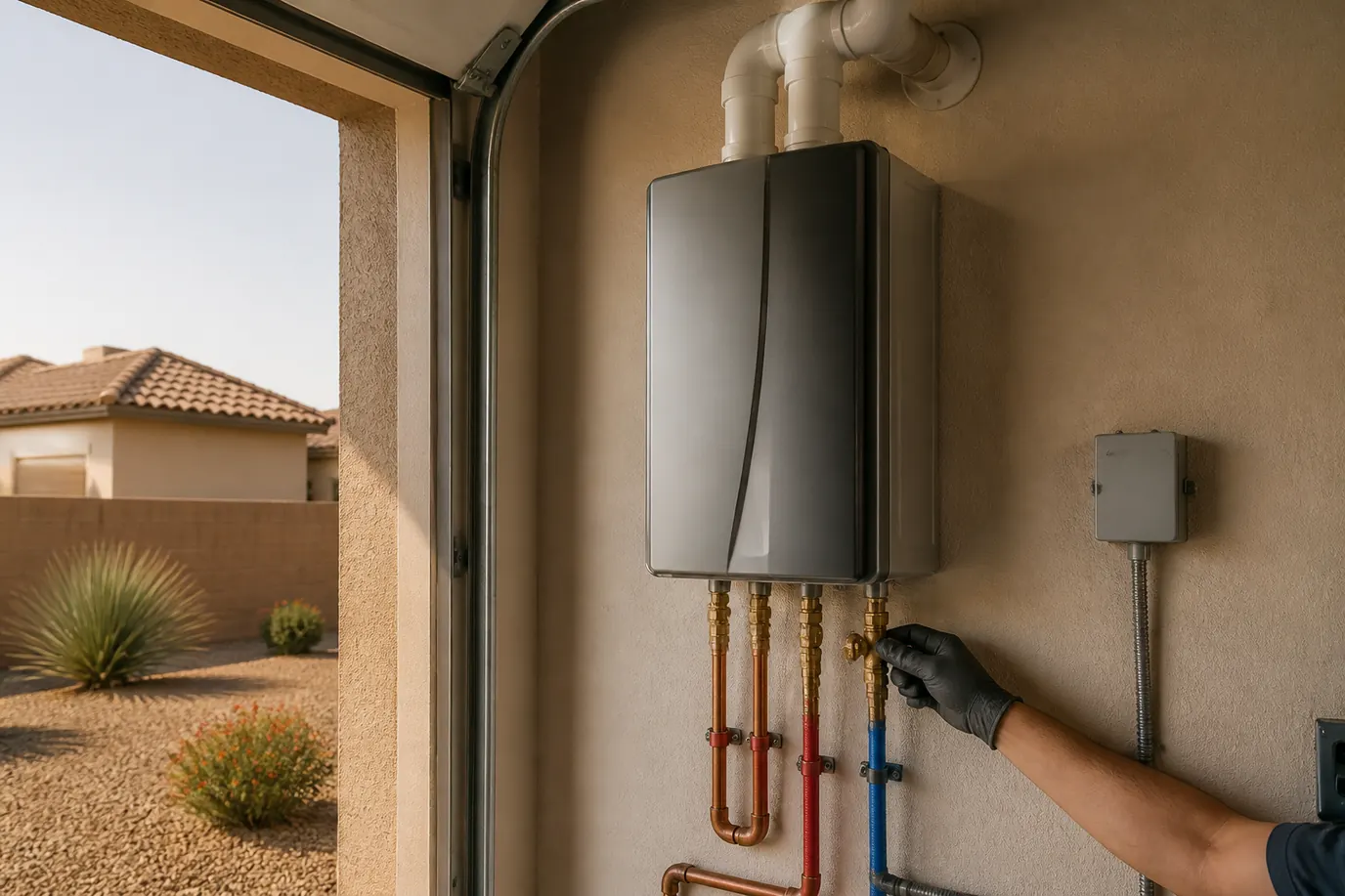
A tankless heater runs water through a narrow heat exchanger. Minerals in the water build up as scale and reduce flow and heat transfer. Over time, the unit overheats, throws codes or shuts down.
The city's 2021 water quality report lists hardness near 14 grains per gallon. That is enough to make annual flushing a real need.
A typical visit isolates the unit, runs a descaling solution through the heat exchanger with a pump, cleans the inlet filter screen and checks error history. The tech may also inspect venting and gas connections.
Ask what the visit covers and whether the descale is included. Some contractors also test combustion on gas units.
A flush costs less than a repair, and replacement costs more than both. These factors matter.
Ask whether the descale is included and how often the manufacturer recommends it.
A yearly flush is the minimum in hard water. A softener upstream reduces scale at the source. Check the manufacturer's guide for any water-quality requirements.
Garage installations get very hot in summer, so make sure the unit has clearance and ventilation.
Many faults are cheap: a sensor, a flow switch or a cleaned filter. A cracked heat exchanger or a failed control board can cost more than the unit is worth if it is old.
Ask for the repair cost, the unit's age and the price of a new one. See water heater replacement if you are weighing a swap.
Tankless gas units need proper venting and enough gas flow. A line that was sized for a tank may be too small for a tankless heater. Poor venting causes error codes and safety shutoffs.
If you smell gas, leave the home and call 911 or the gas utility from outside before calling for service.
Hard water coats heat exchangers with scale, which cuts flow and triggers error codes. Flushing the unit with a descaling solution on a regular schedule is the main maintenance task. Ask the technician what interval fits your water.
Intermittent cold water between hot bursts often traces to low flow rates or a clogged inlet screen. Write down the code on the display before calling. It helps narrow the cause.
A tankless unit needs enough gas for its peak burner load. An undersized line starves it, causing error codes or lukewarm water. Venting must also be sized and sealed for the model.
If you added fixtures, ask whether the unit still keeps up.
Track down cold showers, leaks, noisy tanks and failed heater parts.
Install a softener to handle Valley hard water, or revive one that no longer works.
Replace a worn-out tank with the right capacity, fuel type and placement.
At least once a year in hard water. Some households flush more often. Check the manufacturer's guide and your water hardness.
Codes point to scale, flow trouble, venting or sensor faults. Look up the code, then call if flushing does not clear it.
Some owners do with a pump and descaling solution, but a service visit also checks venting and gas. Follow the manufacturer's steps.
In hard water it usually helps. It reduces scale in the heat exchanger and on fixtures.
Call at any hour. If the unit leaks or you smell gas, shut it off first. The visit time depends on the contractor's calendar.
Follow the maker's guidance, and in hard water areas expect to do it at least yearly.
Many units need a minimum flow to fire. A fixture with a low flow may not trigger it.
Call the line, describe the code or symptom, and a dispatcher will match you with a contractor.
Service area centered on Goodyear and nearby Maricopa County cities.