Sewer Camera Inspection
Look inside the sewer pipe on video before a repair or a home purchase.
The sewer lateral carries everything from the house to the main in the street. When it cracks, sags or fills with roots, drains slow, odors rise and sewage can back up into the house. Sewage coming up in a tub or floor drain means stop using water and call right away.
Call, describe the backup and any history of clogs, and a contractor is lined up.
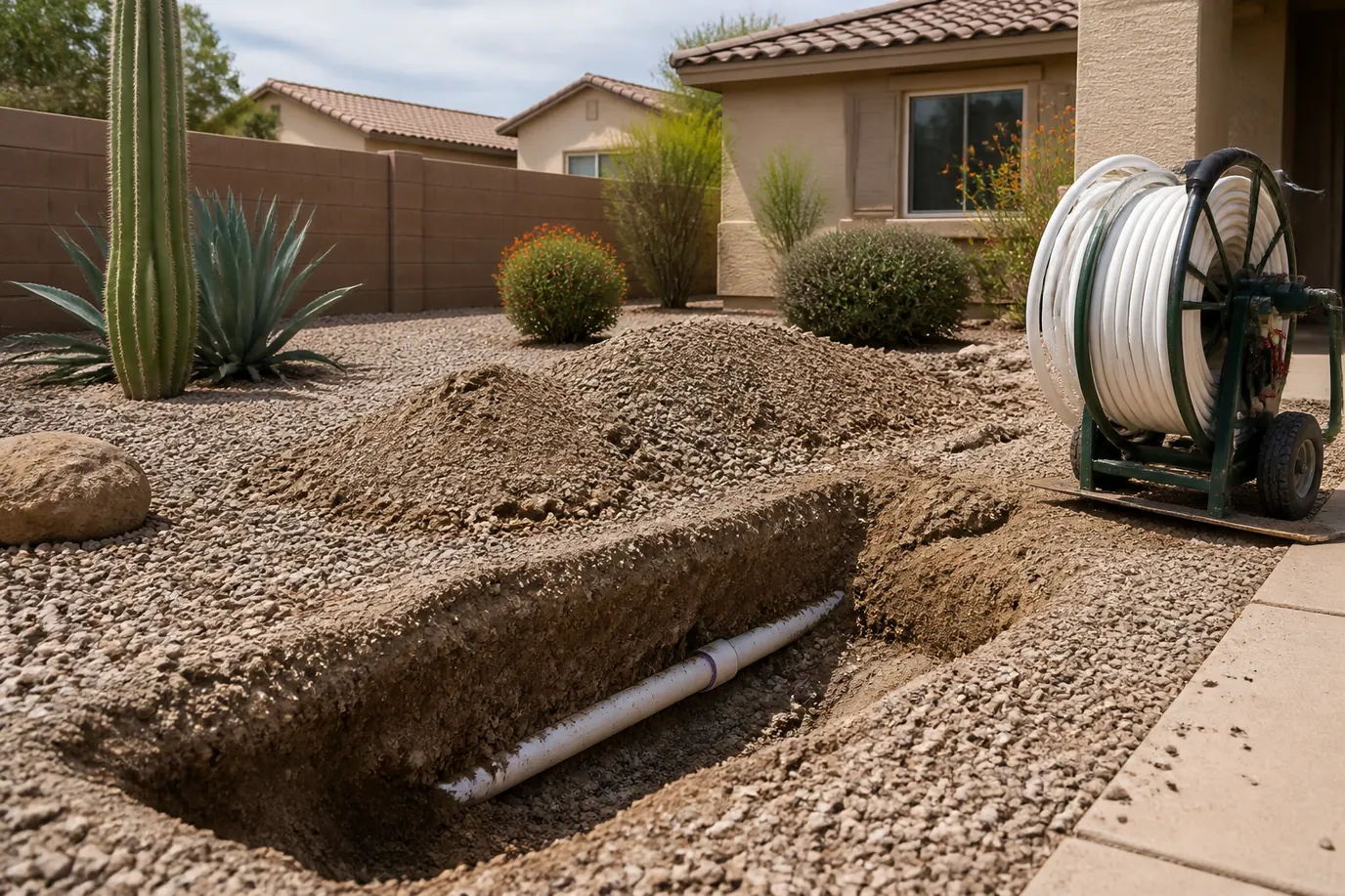
The lateral runs from the house to the public sewer main. In most places, the owner is responsible for it up to the connection point. That is why it matters to know where your property line sits.
A camera is the best way to see inside, and it often answers the question of whether to repair or replace.
Spot repair cuts out a short damaged section and replaces it. Lining puts a resin tube inside the old pipe to seal cracks. Replacement swaps the whole run when damage is widespread.
The choice depends on pipe material, how many defects exist and what sits above the line. Ask the contractor to show the footage and explain why one option fits better than another.
Arizona soil expands, contracts and settles, and it can move a pipe out of line. Caliche makes digging slower and more expensive.
Mature trees in older neighborhoods send roots toward joints, especially where the pipe leaks a little moisture.
Quotes depend on the depth and length of the repair and on what is above the pipe.
Ask for the camera footage and a written scope before approving a major repair.
Roots enter through joints, ground shifts cause sags and offsets, and old materials crack. Clay and cast iron were common years ago, and plastic pipe can also fail if bedding was poor.
Heavy loads over the line, such as vehicles on a poorly covered section, can crush pipe. A tree planted over the lateral is a slow-motion problem.
Sewer work may need a permit, and digging requires a call to Arizona 811 with at least two working days of notice. The contractor should handle both and tell you the plan.
Ask whether the quote includes restoring landscaping, concrete or pavers disturbed by the dig.
A single break can be repaired in place if the rest of the pipe is sound. Several defects along the run may favor replacement. Ask for the camera footage that supports the recommendation.
Mention how old the house is and whether the yard has large trees. Roots seek sewer lines.
Look inside the sewer pipe on video before a repair or a home purchase.
Lay a new lateral from the house to the sewer connection when patching will not last.
Wash grease, scale and roots from pipe walls with high pressure water where a cable falls short.
Multiple slow drains, sewage odors, wet or sunken ground and repeated clogs are the main signs. A camera inspection confirms it.
The owner is usually responsible for the lateral up to the connection with the public main. Boundaries vary, so check with your city or utility.
Sometimes. Lining and certain trenchless methods work from small access points. Footage and pipe condition decide if they fit.
A spot repair can take a day. A longer replacement takes several days. The contractor can give a range once the footage is reviewed.
Stop every faucet, flush and wash cycle. Keep kids and pets out of the wet area, then call the 24/7 line. A contractor clears the blockage first and can scope the pipe afterward to find out why it failed.
Stop using water, then call the line. A dispatcher will match you with a contractor.
Service area centered on Goodyear and nearby Maricopa County cities.